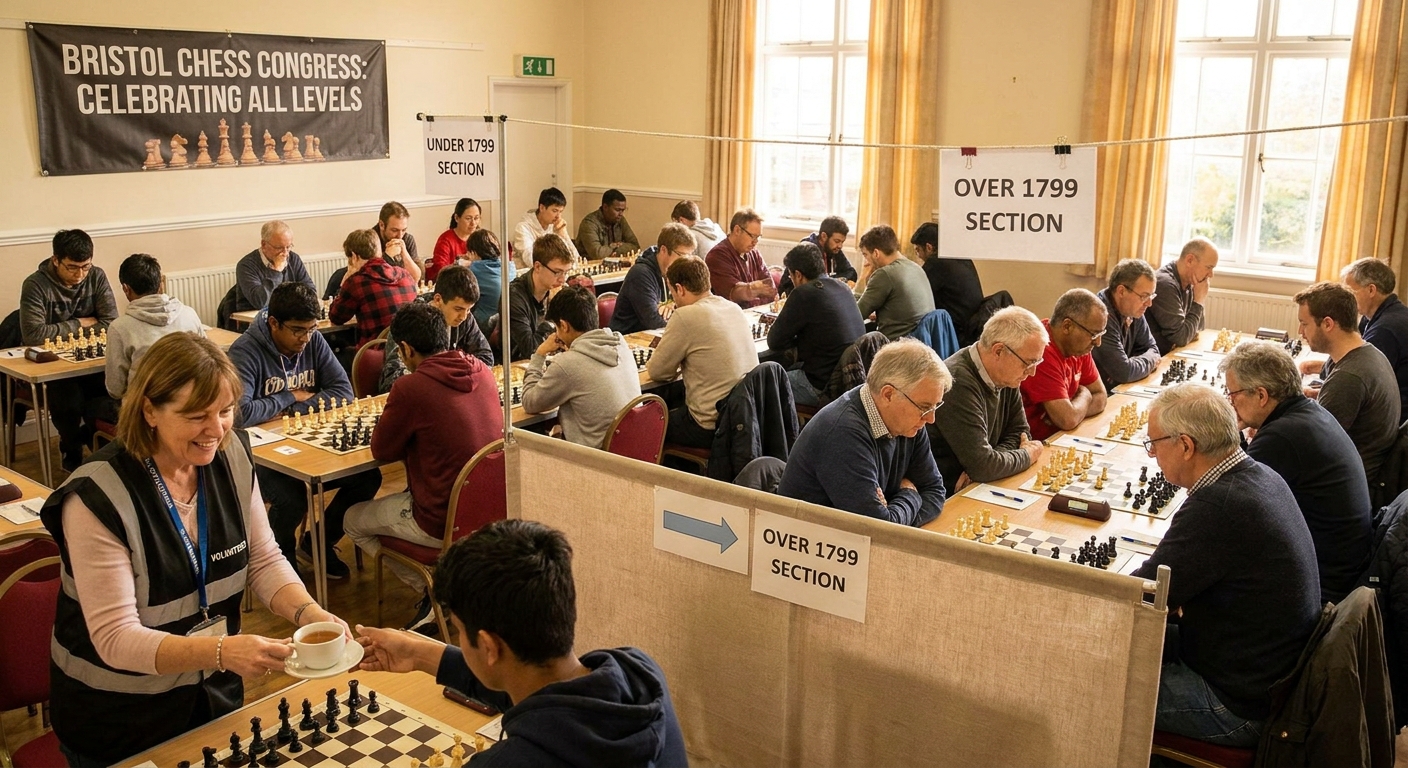
The vibrant chess scene in Bristol is renowned for its competitive spirit and inclusive approach. While "Open" tournaments often attract the seasoned veterans and Grandmasters, a significant part of Bristol's success in fostering talent lies in its thoughtfully structured rating categories. Specifically, the Over/Under 1799 sections have become crucial arenas for players of varying skill levels, providing dedicated competitive opportunities that encourage growth, particularly among new and less experienced participants. These categories are not merely divisions; they are strategic pathways designed to nurture talent and ensure a thriving chess community.
Fostering Inclusivity: The Rationale Behind Rating Categories
Traditional open tournaments, while prestigious, can be daunting for players who are still developing their skills. The vast rating disparities can lead to a lack of competitive games for those at the lower end of the spectrum, potentially discouraging their continued participation. Bristol's chess congresses address this by implementing rating-based sections. The 1799 cutoff is a carefully chosen benchmark, segmenting players into groups where they can compete more equitably against peers of similar strength. This design ensures that every participant, regardless of their current rating, has a genuine chance of winning prizes, improving their rating, and, most importantly, enjoying a challenging and rewarding experience. It transforms the intimidating landscape of an open tournament into a series of accessible, yet still rigorous, competitive environments.
The 92nd Bristol Over 1799 Championship: A Stepping Stone to Mastery
For players rated 1800 and above, the Over 1799 Championship serves as a high-stakes battleground. This section, exemplified by the upcoming 92nd Bristol Over 1799 Championship, offers a robust competitive environment for those who have already established a strong foundation in chess. It’s a testing ground for improving players aiming for master titles and a continued challenge for experienced amateurs. The level of play is high, demanding strategic depth and tactical precision, providing invaluable experience that helps bridge the gap towards the elite Open sections. Participating in this championship is not just about winning; it's about pushing one's boundaries, refining one's game against strong opposition, and consolidating a higher rating. It provides a clear aspirational target for players progressing through the lower categories.
Under 1800 Events: Nurturing Bristol's Emerging Talent
Perhaps the most critical categories for the future of Bristol chess are the Under 1800 events. These sections, which might include Under 1700, Under 1600, or even Under 1400 tournaments depending on the specific congress, are explicitly designed to cater to less experienced and developing players. Here, the emphasis shifts from professional aspirations to fundamental skill development and competitive exposure. New players find a welcoming and supportive environment where they can apply newly learned theories, test different openings, and gain crucial tournament experience without the pressure of facing much higher-rated opponents. This structured approach helps build confidence, reduces performance anxiety, and allows players to focus on their growth trajectory. Many current strong players in Bristol began their competitive journey in these very categories, progressively moving up as their skills and ratings improved. These sections are the lifeblood for sustained growth in the local chess community.
Beyond the Scoreboard: The Impact on Player Development
The segmentation of tournaments into Over/Under 1799 categories has a profound impact beyond simply balancing the playing field. It creates a clearer progression path for players. A beginner can aim for success in an Under 1400 section, then an Under 1600, then an Under 1800, before finally aspiring to the Over 1799 and eventually the Open. This ladder provides tangible goals and celebrates incremental improvements, keeping players engaged and motivated. Moreover, these categories foster a stronger sense of community among players of similar strength, leading to more targeted coaching, study groups, and friendships that enhance the overall chess experience. New players, in particular, benefit from this structured pathway, gaining the necessary exposure and confidence to mature into formidable competitors.
Practical Advice for Aspiring Players
For those considering entering Bristol's Under 1800 events, here are some practical tips:
1. Preparation is Key: Study basic openings, practice tactics daily, and review simple endgames. Resources like online puzzles and beginner books are invaluable.
2. Learn from Every Game: Win or lose, analyze your games. Identify mistakes and areas for improvement. Software and stronger players can help with post-game analysis.
3. Manage Your Time: Tournament chess requires good time management. Practice playing with a clock to get accustomed to time pressure.
4. Embrace the Experience: Don't let fear of losing deter you. Every game is a learning opportunity. Focus on playing your best and enjoying the challenge.
5. Connect with the Community: Engage with fellow players. Discussions, shared analysis, and friendly banter enhance the overall experience and open doors to learning.
Looking Ahead: Key Dates for the 2026 Bristol Chess Season
The commitment to these inclusive categories continues into 2026. While specific dates are subject to official confirmation and may be illustrative at this stage, players can anticipate the 92nd Bristol Over 1799 Championship to potentially take place over a weekend in early Spring 2026, perhaps March 7-9, 2026. Similarly, the main Under 1800 events are typically integrated into larger congresses or run as standalone tournaments throughout the year. Keep an eye on the official Bristol Chess Congress website for definitive announcements, but generally expect opportunities in late Summer (e.g., August 15-17, 2026) and late Autumn (e.g., November 7-9, 2026). Early registration is often encouraged to secure a spot.
In conclusion, Bristol's dedication to its Over/Under 1799 categories is a testament to its forward-thinking approach to chess development. By providing targeted, inclusive competitive environments, the city ensures that both seasoned players find worthy challenges and, crucially, that a continuous stream of new and emerging talent is nurtured. These categories are vital cogs in the Bristol chess machine, propelling its growth and ensuring a vibrant, dynamic, and welcoming scene for all.